MEGHNA KAMDAR
Explores The Magic In Every Meal

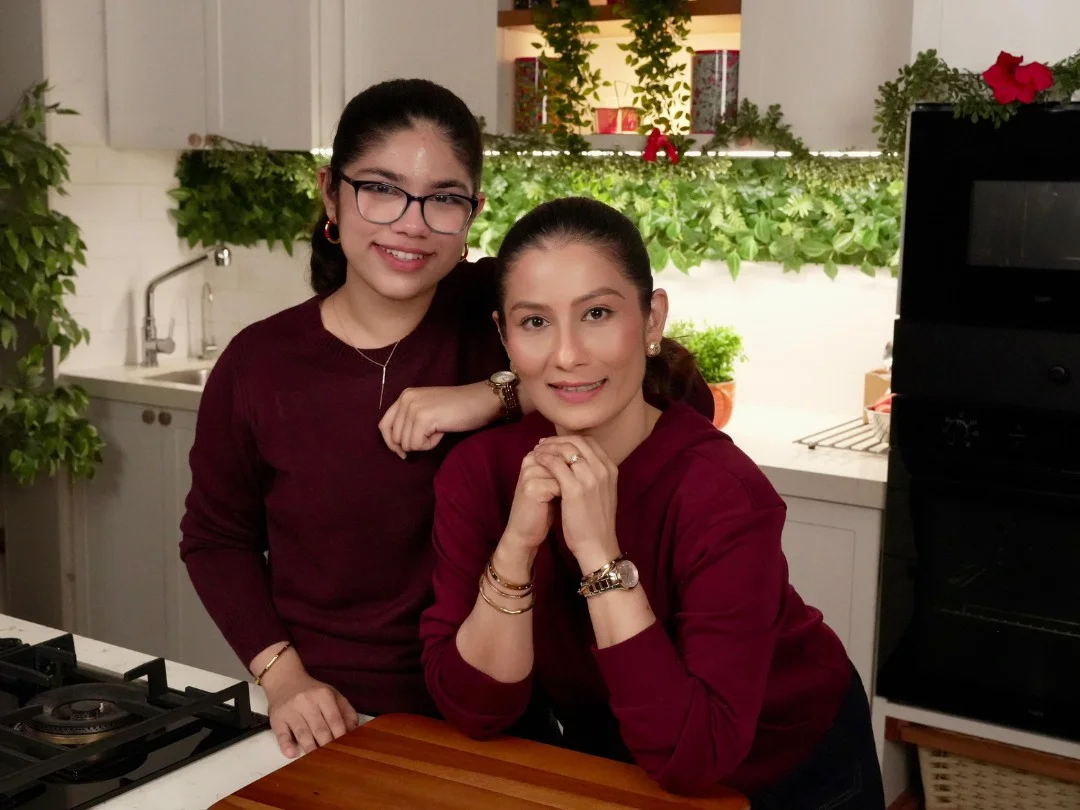
Some people enter the culinary world not by choice, but by necessity, and in the process, redefine what it means to feed a family, a community, and, eventually, a digital nation. Meghna Kamdar is one such force of nature. Meghna is not just a content creator; she is a storyteller, mentor, and a champion of the everyday cook. Meghna’s kitchen is not just a physical space, but an ever-expanding universe where traditional Gujarati flavours meet modern sensibilities, and where the humblest of ingredients are transformed into dishes that spark joy and connection. Her story began with a simple motivation: to serve her family wholesome, home-cooked meals. Yet, as her recipes migrated from dinner tables to digital screens, Meghna found herself at the forefront of a movement, one that values authenticity over aesthetics, and genuine connection over viral trends. Her digital presence, “Meghna’s Food Magic,” is aptly named: she conjures magic not from rare ingredients or compl-icated techniques, but from the warmth and wisdom that only a true home chef can offer.
For the millions who follow her across platforms, Meghna is more than an Instagram handle or a YouTube channel. She is the friend who shows you how to make Tiramisu with rusk, the mentor who demystifies a daunting cake recipe, and the voice that reassures you when your first pressure cooker bursts.
Her videos are devoid of pretension, often filmed in the gentle chaos of a real kitchen, punctuated by her signature “flying kiss” and a sparkling sense of humour. It is this relatability, coupled with her insistence on using accessible, pantry-friendly ingredients, that has endeared her to viewers from India to the UK, from first-time cooks to seasoned home makers. But what makes Meghna truly inspirational is her ability to turn obsta-cles into opportunities. She speaks candidly of her early failures, disastrous cakes, explosive pressure cookers, and the steep learning curve of adapting to the world of content creation.

MOSAIC: How has your relationship with food evolved as your kitchen moved from behind the scenes to the digital spotlight and now into the fast-paced creator economy?
Meghna Kamdar: My journey started with the most basic desire: to feed my family with healthy, home-cooked food. As my kitchen became a stage, I had to master more than just recipes; I had to learn about lighting, presentation, voice modulation, and how to speak to a camera. The transition from lengthy, conversational videos to quick, relatable reels was a challenge, but my core mission never changed. I want my viewers to see my food and think, “I can make this too.” That means using ingredients you already have and offering healthier alternatives that never compromise on flavour.
For me, a recipe is only truly “viral” if it becomes part of someone’s family tradition, if a mother sends my video to her child overseas, or if my recipe helps someone stick to a health goal. My dream has always been for people to cook at home and discover that “gourmet” is possible with what’s in their own kitchen. I like to say: if my recipes help people live longer, they’ll stay with “Meghna’s Food Magic” longer, and those habits will pass on to the next generation. That’s the real creator economy in my eyes.
MOSAIC: With so many food creators and recipe reels populating social media, how do you perceive competition? Does it feel like noise, inspiration, or the sign of a thriving food culture?
Meghna Kamdar: This might surprise you, but when my team compared the followers of different recipe creators, we found hardly any overlap. Unlike movies or cricket matches, social media is about personal connection, people follow you because they relate to your story. I know some creators feel pressure or worry about brand deals, but for me, it’s never been a competition. Brands don’t choose between “Creator A” or “Creator B” on budget alone; they pick someone who clicks with their audience.
What matters is how you engage with your viewers. I spend three to four hours a day personally replying to my community across Instagram, Facebook, YouTube, Pinterest, Threads, and X. When someone shares their kitchen experiments with me or even their failures we solve it together. I understand their struggles because I wasn’t always a chef; I started from zero, just like many of them. For me, the food space isn’t a race; it’s a conversation.
MOSAIC: AI is making inroads into food content, from automated recipe generators to editing tools. As someone who cooks from experience and intuition, how do you see AI influencing the future of food storytelling?
Meghna Kamdar: I believe AI should be a tool for us, not our master. Sure, it can help draft scripts or polish writing, but I rarely use a script; I prefer to improvise, because that’s what makes me real. AI can churn out endless recipes, but it doesn’t know what tastes good, how to season a dish, or how to stretch ingredients like a home cook does.
AI can’t haggle at the vegetable market or choose the freshest coriander. It won’t know when the dal is burnt or how to infuse a story into a meal. Food is woven from memory and emotion. AI can assist, but it will never replace the soul of home cooking. In fact, AI is more likely to threaten those who rely on copying others or fancy equipment, because genuine connection can’t be automated.
MOSAIC: Gujarati cuisine is celebrated for its seasonality, plant-based focus, and frugality. Do you think traditional Indian kitchens were sustainable long before “sustainability” became a buzzword?
Meghna Kamdar: Absolutely! In Indian kitchens, especially Gujarati ones, zero waste was just common sense. We respected every ingredient. I always tell my viewers, moms are magicians! We turn karela (bitter gourd) skin into muthiya, orange peels into zest for desserts and teas, and leftover sabji into chutneys. Even a handful of leftover rice can be transformed into Bhat na Shekla, a delicious pancake. Stuffed parathas, tikkis, these are all vehicles for using up odds and ends. We never needed a manual on sustainability. It was just how we lived, making sure nothing was wasted and everything was used creatively.


MOSAIC: Beyond recipes, what do you think are the core strengths of your style that create such a strong bond with your audience?
Meghna Kamdar: I think it’s my simplicity and honesty. I don’t try to impress; I try to help. During the pandemic, so many people who had never cooked before turned to my videos and realised they could make “difficult” dishes with what they had at home. But the real connection is built through stories like the young boy who cooked for his father while his mother was in the hospital, or the mother in the UK whose son with Down’s syndrome waits for my videos every day. Working moms tell me my recipes help them bond with their families. When people ask me for selfies at fruit markets or airports, it’s because they see me as a friend. Even my “flying kiss” at the end of each video has become a thing viewers copy! It’s about building trust and making people feel they belong.
MOSAIC: The younger generation is drawn to global and fusion cuisines. Do you ever worry that regional Indian food might fade away or do you see a revival?
Meghna Kamdar: I don’t worry it’s the opposite! Gen Z might love trends and travel, but they’re also curious about their roots. They want traditional recipes, but in a modern, approachable format. My followers are from all over the world, and they love my “healthy twists” or new takes on classics. People are learning to make twenty kinds of muthiya or dhokla from my page. I focus on seasonal treasures like mogri nu shaak or winter dishes like adadiya pak, that you can’t find in restaurants. It’s not about follower counts anymore; it’s about making content that adds value, connects stories, and keeps our food heritage alive.
MOSAIC: Have you taken on the role of educator or mentor, especially for younger generations? Should cooking be taught more intentionally?
Meghna Kamdar: Teaching comes naturally to me. After finishing my culinary course, I started cooking classes and catering from home, but while living abroad, I saw firsthand how important it is to intentionally build healthy habits. When “Meghna’s Kitchen” didn’t work out at first, I didn’t give up; instead, I launched “Meghna’s Food Magic” on YouTube with help from friends. During lockdown, my Zoom classes were always full. My Baklava class was so popular that people started their own businesses from what they learned! I love the Q&A at the end of my classes; I’ll happily go on for hours if someone wants to learn. Cooking should be taught as a life skill, one that brings health and self-sufficiency.

MOSAIC: Are there new directions you’re exploring, such as television, travel, cookbooks, or something else?
Meghna Kamdar: I’m really excited about food tourism. I’ve worked with tourism boards in Singapore, Qatar, the Maldives, and Egypt to promote vegetarian and vegan travel. Finding plant-based food abroad can be tough for Indians, but I love discovering new options and talking to chefs about adding vegetarian dishes to their menus. I once cooked khichdi in a Sri Lankan hotel kitchen, and they ended up adding it to their menu!
Workshops, global travel content, and showing people how to eat adventurously while staying true to their roots, that’s what I want to focus on. I want to empower people to feel confident about being vegetarian, wherever they go.
MOSAIC: How do you define success today? Is it about numbers, impact, cultural preservation, or something else?
Meghna Kamdar: Numbers are nice, but they’re just a byproduct of trust. Real success is when boys and men in a family who might never have cooked before start taking an interest and participating together. Changing a family’s daily habits is a true win for me. I’m also proud of the integrity of my work. I turn down campaigns that don’t align with my values, even if it means turning away easy money. Creators have a responsibility to uplift their communities. As I often remind new bloggers, “Don’t sell yourself cheap.” With great power comes great responsibility. That’s what success means to me.
MOSAIC: In today’s fast-paced world, how can parents pass on basic cooking skills and food awareness to their children? Any practical advice for raising healthy, food-conscious kids?
Meghna Kamdar: We need to stop just telling kids what to do and start involving them in the process. My daughter, Kangna, is interested in filmmaking, so she helps with my production. She’s learned that making a cup of chai for the camera takes hours! It’s a way for her to see the hard work behind the scenes. Almost every house now has content creation happening; if kids see the effort that goes into it, they’ll learn discipline and dedication. My advice is: let your children witness the process, whether it’s cooking or content creation. Also, be open to learning from them, they have fresh ideas! When they feel heard, they’re more likely to listen to you about healthy habits.
MOSAIC: With the rise of takeout, cloud kitchens, and dining out, what role can schools play in promoting healthy eating and basic cooking skills?
Meghna Kamdar: Schools are crucial. We have PE classes to keep kids active, but food literacy is just as important. Cooking at home is directly related to health, it’s the foundation for tackling issues like childhood obesity and diabetes. If schools teach that cooking isn’t a chore but a way to care for yourself, we can raise a generation that values home-cooked food. Schools can help children see cooking as a life skill, not just a necessity. That’s how we create a healthier, more mindful society.
MOSAIC: If you could share one actionable tip for fostering a culture of sustainability through everyday meals, what would it be?
Meghna Kamdar: “Look at your leftovers with love.” Before throwing anything away, ask yourself: Can this become paratha stuffing or chutney? Some of my best recipes come from not wanting to waste food. Simple habits like rinsing out the last bit of batter from a mixer or planting seeds from your veggies make a difference. Sustainability isn’t about grand gestures; it’s about small, mindful acts that show respect for our food and our planet. If we all did this, we’d be eating better and caring more for our families and for the Earth.