
Chef Johnson
Farmlore Where The Land Dictates The Plate


On the outskirts of Bengaluru, far from the cacophony of city life, lies a place that quietly redefines what it means to eat, to cook, and to live in harmony with the land. Farmlore, the brainchild of Chef Johnson and his partner Kaushik Raju, is more than just a restaurant; it is a philosophy, a movement, a living experiment in sustainable gastronomy. Here, food isn’t merely prepared; it’s cultivated, nurtured, and transformed with a reverence for the rhythms of nature and the spirit of resourceful creativity.
The story of Farmlore begins, as many transformative journeys do, in the midst of crisis. In early 2020, as the world braced for the upheaval of the COVID-19 pandemic, Johnson and Raju were on the cusp of opening a restaurant in the heart of the city. The concept, then called “Lore,” was rooted in the art of storytelling through food and in an exploration of culture, memory, and place. But as lockdowns swept the world and supply chains ground to a halt, the city’s allure faded in the harsh light of uncertainty. What followed was a radical pivot: rather than pause their dream, they brought it to the land, moving operations to a small farm on the city’s edge. It was a leap of faith that would test their ingenuity, resilience, and willingness to challenge convention.
In those early days, the farm was both a sanctuary and a crucible. With access to ingredients uncertain and even cooking gas in short supply, Johnson and his team found themselves forced to innovate. “We had to rethink our priorities and make it sustainable from the ground up,” he recalls. “We couldn’t depend on so many outside elements anymore.” The solution was as old as cooking itself: they learned to harness fire, pruning mango trees to provide wood for open-flame cooking, and turned to the land for their daily larder. Rice cooked over a wood fire became an early revelation; a dish that was faster, more flavorful, and deeply connected to the place it was made. Every meal was a lesson in adaptability, every challenge an invitation to rediscover the essential joys of making do with what was at hand.
Today, Farmlore stands as a testament to that spirit of resourcefulness and reverence for the Earth. The kitchen operates almost entirely on ingredients grown on the farm itself: figs, coconuts, onions, tomatoes, chillies, herbs, and milk from a herd of thirty cows, whose milk is transformed into butter and cheese. Even the coconut oil is pressed on site. The menu, if it can be called that, is dictated by the soil and the season; there is no à la carte selection, only a ten-course tasting experience that changes with each harvest. Guests are invited to arrive with open minds and empty plates, trusting the process and the chef’s ingenuity. One day, they might be served the sweet, earthy bounty of chikoo; the next, the delicate flavours of hydroponically grown herbs or mushrooms from a neighbouring farm.
But Farmlore is more than the sum of its ingredients or the ingenuity of its kitchen. It’s a place where the boundaries between chef, farmer, and educator blur; a place that invites each visitor to reflect on the meaning of sustainability in a world that often forgets its roots. Chef Johnson’s journey is a story of adaptation, innovation, and a deep-seated belief that food can be both sustenance and story, both tradition and transformation. His work, alongside that of Kaushik Raju and their dedicated team, stands as a beacon for anyone seeking a more mindful, meaningful way to eat and live.
What follows is a conversation with Chef Johnson, a journey through the challenges, philosophies, and triumphs that have shaped Farmlore into the unique culinary landmark it is today.
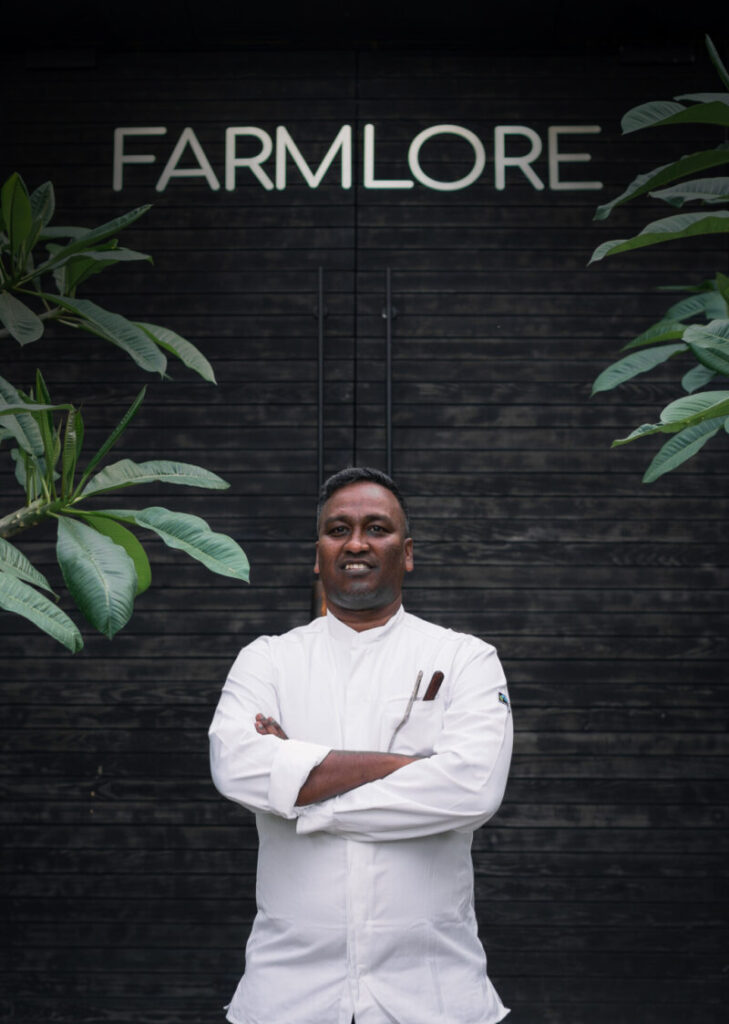
MOSAIC: Chef Johnson, Farmlore was born out of necessity during the pandemic, but it’s become something much more, a movement, even. Can you describe what that leap of faith felt like, moving away from the city and embracing the uncertainty of starting over on a farm?
Chef Johnson: When we first imagined our restaurant, it was going to be in the heart of the city, a place called “Lore,” where food and storytelling would come together. But right when we were about to begin construction, the world changed. COVID arrived, and suddenly everything we’d planned was up in the air. It wasn’t just about finding ingredients, it was about survival, about resilience. Real estate was uncertain, supply chains were broken, and even cooking gas was hard to come by. We were forced to rethink everything. That’s when Kaushik Raju, my partner and founder, and I decided to take a leap. Instead of waiting for things to get back to normal, we asked ourselves, “Why not build something that doesn’t depend so much on outside forces?” That’s how Farmlore began, by nurturing the land around us, building a system that could sustain itself, and trusting that if we did it right, people would travel to us.
MOSAIC: There’s a real sense of innovation in the way you’ve built Farmlore. What drove those innovations, and how did they shape the experience for your guests?
Chef Johnson: Necessity, really! At first, we had to use what we had. Gas was a problem, so we looked at the mango trees on the farm and thought, “Why not use the wood?” Pruning the trees gave us firewood and more mangoes, too. Cooking on a wood fire was an eye-opener. The first time I made rice that way, it was faster and more flavorful than anything I’d done with modern equipment. We began to realise that by working with what the land provided, we could create something truly unique. That led us to abandon the traditional menu. Instead, we let the farm dictate what we served. The menu changes every day, based on what’s ready to harvest. Our guests don’t come for a specific dish, they come for the experience, for the surprise. It keeps us creative, and it keeps them connected to the land.
MOSAIC: That’s a radical departure from the way most restaurants operate. How do your guests respond to this “open mind” approach? Is there ever any resistance?
Chef Johnson: Honestly, most people find it refreshing. We ask them to let us know if they’re vegetarian or have allergies, and after that, we just ask them to trust us. For some, it’s a leap; they’re used to controlling their dining experience. But the vast majority end up loving it. They’re curious, they’re engaged, and they start to see food and farming in a new way. They understand that what’s on their plate is a direct reflection of what’s happening in the soil, the weather, and the season. It’s a connection that’s rare in today’s world.
MOSAIC: Can you walk us through a typical day in the kitchen, and what it means to cook with ingredients you’ve nurtured from seed to plate?
Chef Johnson: Every day is different. We start by walking the farm, seeing what’s ready, what’s at its peak. Some days it’s figs and tomatoes, other days it’s mushrooms from a neighbouring farm or herbs from our hydroponic beds. The cows give us milk, which we turn into butter and cheese. The coconut trees provide oil.
We even make our own ghee. There’s a deep respect for each ingredient because we know how hard it is to grow them. When you’ve watched a tomato ripen, or milked a cow yourself, you don’t waste a thing. The kitchen is a place of constant adaptation. The land tells us what to cook, and we follow its lead. It’s humbling, but it’s also incredibly inspiring.
MOSAIC: Sustainability is at the heart of Farmlore’s philosophy. How do you see your role as a chef evolving in this context? Is it enough just to cook, or do you feel a responsibility to educate and advocate for a different way of living?
Chef Johnson: Absolutely, the role of the chef has changed. It’s not just about making delicious food anymore; it’s about stewardship, about being a bridge between the land and the people who eat from it. If you spend 15 or 20 years in a kitchen, you develop an understanding of seasons, of produce, of the stories behind each ingredient. That knowledge becomes a responsibility. I see myself as an educator, an advocate, and, in some ways, even a social reformer. Food is a powerful tool for change. Through it, we can teach people about sustainability, about respecting the land, about valuing what we have.
MOSAIC: You also work with schools, bringing children to the farm and teaching them about food and farming. Why is that important to you?
Chef Johnson: I think it’s essential. When I talk to kids, I ask them if they know how to cook. Most say Maggi, and that’s it. It’s funny, but it’s also a little sad. We’re losing our connection to food, to the land, to the knowledge our grandparents had. When kids come to Farmlore, they see how a carrot grows, how milk becomes cheese, and how herbs go from the garden to the plate. They start to understand the value of each ingredient. It’s about making it interesting and creative, so they want to learn more. If we don’t teach the next generation, who will carry this knowledge forward?
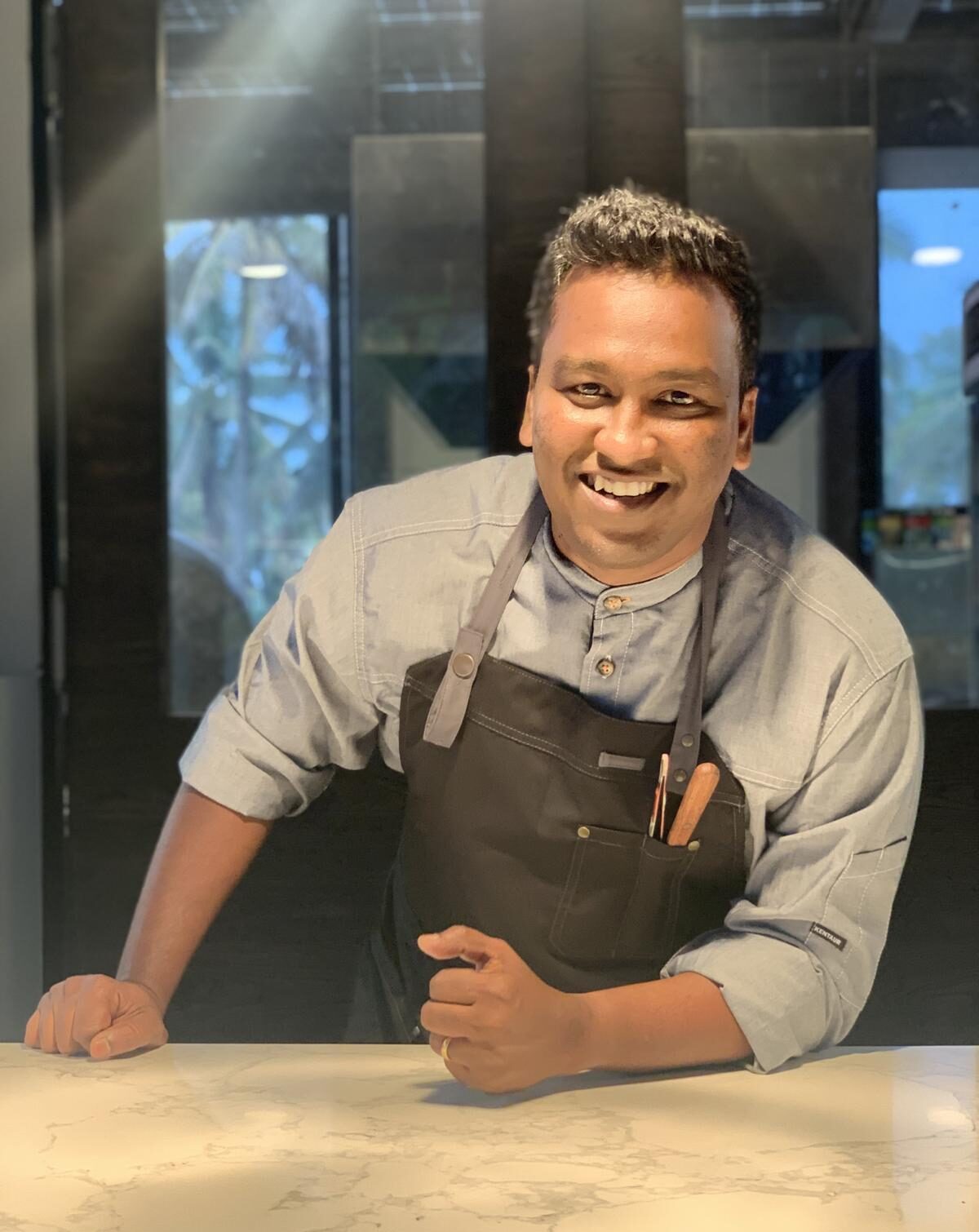
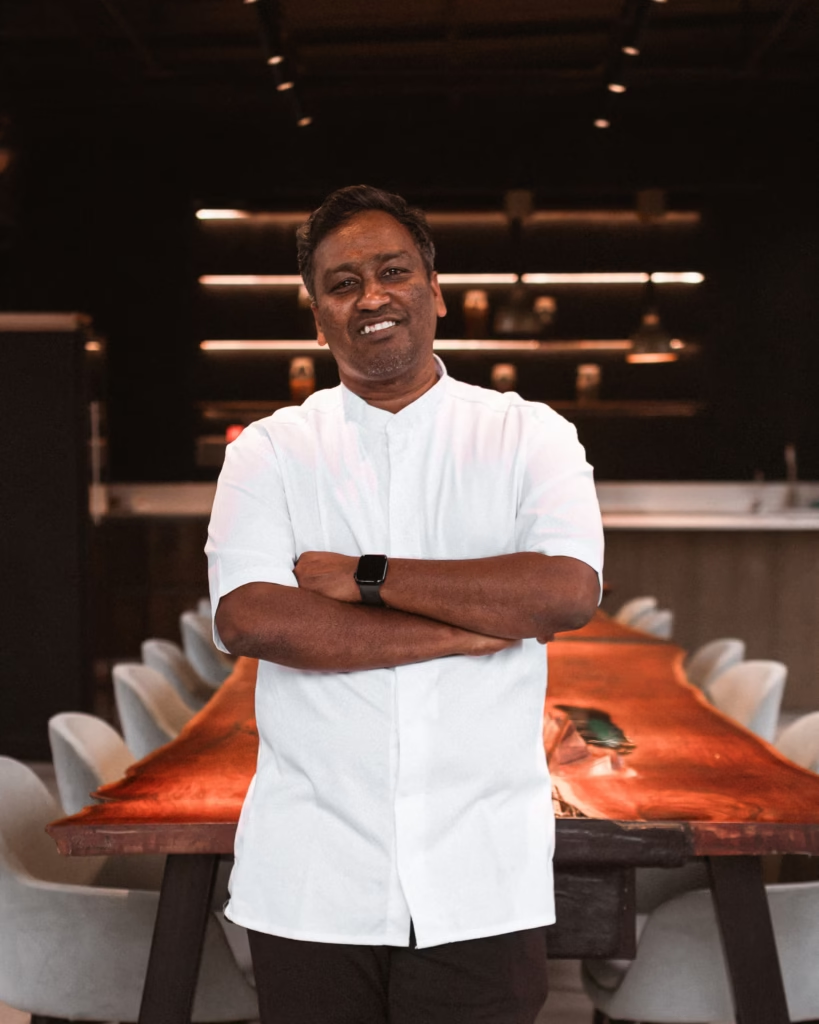
MOSAIC: For those who want to live more sustainably, or for young chefs inspired by your journey, what advice would you give? Where should they start?
Chef Johnson: Start at home. Listen to your parents, your grandparents, they have a lot of wisdom about how to live simply and sustainably. Appreciate what’s in your backyard. Don’t get caught up in trends or what you see on social media. Focus on what’s real, what’s local, what’s seasonal. And above all, stay positive. There will always be challenges, but if you stay true to your values and keep moving forward, you’ll find your own way. Sustainability isn’t about perfection; it’s about making thoughtful choices every day.
MOSAIC: Looking back, what are you most proud of at Farmlore, and what do you hope your legacy will be?
Chef Johnson: I’m most proud of the community we’ve built, our team, our guests, the farmers, the cows, the land itself. Farmlore is a collaboration. It’s not just my story; it’s everyone’s. I hope our legacy is one of inspiration, that we’ve shown it’s possible to do things differently, to create something meaningful, to live and cook in a way that respects the Earth. And none of this would have been possible without Kaushik Raju, my partner and founder. He built the system that keeps us going. I’m grateful every day for the chance to do this work.