


Founded in 2021, the Plant-Based Foods Industry Association (PBFIA) serves as the collective voice of India’s plant-based food sector. The organisation connects farmers, manufacturers, researchers, policymakers, and entrepreneurs. It strengthens the entire value chain, from crop cultivation to consumer products. Its broader vision promotes vegan alternatives and creates a sustainable food system. This system benefits farmers, improves national nutrition, and supports environmental goals. For Shrivastava, the opportunity is both economic and ecological. With growing concerns about protein deficiency, climate change, and food security, plant proteins could become a vital part of India’s future diet.
Speaking with MOSAIC Magazine, he outlines the association’s mission, the policy reforms needed to grow the sector, and how plant-based foods could help shape a healthier, more sustainable future for India.
MOSAIC: What is the mission of the Plant-Based Foods Industry Association, and how are you advancing the plant-based food ecosystem through policy reforms in India?
PRAVEER: Our vision is to develop a robust plant-based food industry that meets growing consumer demand while advancing sustainability, farmer income, and public health. To achieve this, the association’s mission is built on four key pillars.
First, we focus on building strong networks across the industry. We connect food businesses, investors, policymakers, and consumers so that bottlenecks within the ecosystem can be addressed collectively.
Second, we advocate for policy reforms. Significant barriers remain for plant-based foods, including taxation, import duties, and regulatory uncertainty. We work with the government to ensure policies foster innovation and growth rather than restrict them.
Third, we position our members as change-makers. Through collaboration with media and public platforms, we highlight companies and innovators transforming India’s food system.
Fourth, we enable knowledge sharing. This includes providing technical information, policy updates, labelling regulations, and market insights that help the industry grow in an informed and responsible way.
Our work covers the entire value chain, from agriculture to food processing. For example, we partner with institutions such as the International Crops Research Institute for the Semi-Arid Tropics to support the development of high-yielding, protein-rich crops, such as pulses and legumes. Our goal is to ensure farmers have access to seeds that boost productivity and meet the rising demand for plant protein.
MOSAIC: Industry reports indicate that India’s plant-based food market exceeded ₹300 crore (approximately USD 36 million) in 2024, with an annual growth rate of nearly 18%. What are PBFIA’s key priorities for 2025?
PRAVEER: Our main goal for the coming year is to make plant-based products more affordable and accessible, building on the progress achieved so far. Accessibility depends on distribution networks managed by brands. Affordability is our greatest opportunity. We work with policymakers to reduce taxes and input costs, lowering production costs.
For example, plant-based products were previously taxed more than dairy. After government discussions, GST was reduced to about 5%, aligning with dairy and marking a milestone for the industry. If we continue addressing barriers such as high import duties on key ingredients and logistics costs, we can bring prices closer to those of conventional products. As a result, this will help expand consumption nationwide.
MOSAIC: Could you share how the Plant-Based Foods Industry Association was formed?
PRAVEER: The association was established in November 2021 by two founding trustees who recognised the emerging potential of plant-based foods in India. They gained insight by observing the sector’s rapid growth in the United States and other international markets. They expected similar trends to reach India. At the same time, India’s unique factors, such as a large vegetarian population, heightened sustainability awareness, and growing concerns about protein deficiency, have made it well-suited for plant-based innovation, further validating the need for an industry-focused association. While People for the Ethical Treatment of Animals and the Indian Animal Fund advocate for vegan lifestyles on ethical grounds, no industry body represents the business and supply-chain side of plant-based foods. This gap led them to create PBFIA—a platform to support manufacturers, farmers, investors, and policymakers in the space.
MOSAIC: With the rise of veganism and dairy alternatives, how is consumer demand shaping the plant-based industry in India?
PRAVEER: The dairy alternative segment currently experiences the fastest growth within the industry. According to our association’s data, this segment is expanding at over 20% annually, based on year-on-year retail sales from 2022 to 2024. Projections suggest growth could reach 25–30% in the coming years.
Products like soy milk, almond milk, and oat milk are gaining popularity, especially among those who are lactose intolerant. In some regions, particularly the Northeast and hilly areas, lactose intolerance is more common. This makes plant-based milk a practical alternative. The meat alternative segment is also growing, though at a slower pace, with annual growth estimated between 13% and 14%. One reason is cultural perception: many vegetarians do not want food that resembles meat, while non-vegetarians often prefer traditional meat products. For plant proteins to succeed in India, they must fit local food habits. We should not focus only on Western options like burgers. Instead, we need protein-fortified atta, soy- or pea-protein snacks, and ingredients that blend into everyday Indian cooking.
MOSAIC: What are some of the biggest challenges the plant-based food sector faces today?
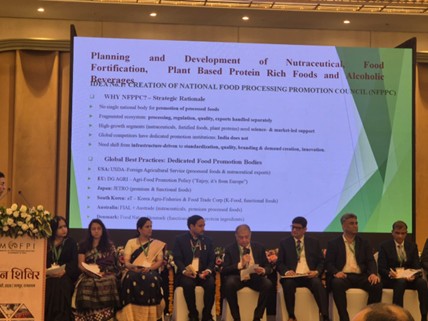
PRAVEER: A major challenge is that the industry is still relatively small and lacks formal recognition as a distinct sector. Several ministries—Agriculture, Food Processing, MSME, and Consumer Affairs—are involved, but coordination remains limited. A national plant protein mission could unite these stakeholders. Another hurdle is the supply chain. While India produces many pulses, many lack the high protein content needed for advanced food processing. This calls for research into seed development, better farming practices, and improved market links for farmers. Generating demand is equally important. Integrating plant proteins into programs like PM Poshan Abhiyaan could improve nutrition for millions of children. It could also create a stable demand for farmers.
MOSAIC: What solutions do you propose to overcome these challenges?
PRAVEER: The solution lies in strengthening both supply and demand. On the supply side, increasing productivity through better seeds and agricultural practices is crucial. States such as Madhya Pradesh, Rajasthan, Telangana, Karnataka, and Maharashtra, in particular, hold strong potential for cultivating pulses and protein crops. At the processing level, we propose creating ‘smart protein clusters.’ These are agro-processing hubs where plant proteins can be extracted and converted into ingredients such as isolates and concentrates. Integrating plant protein
into national nutrition programs could create a stable domestic market. India also has strong export potential. With quality standards and certifications aligned to international regulations, we could supply plant-based products globally.
MOSAIC: Affordability remains a major concern. How can plant-based foods become more accessible to price-sensitive consumers?
PRAVEER: The challenge is primarily one of demand and supply dynamics. Many plant-based products rely on imported ingredients, such as pea protein or specialised concentrates. These attract high import duties, around 30% plus surcharges. These costs inevitably raise retail prices. Retail margins also impact affordability. While retailers typically apply a margin of about 10% on dairy products according to industry benchmarks, plant-based products sometimes face much higher margins—from 30% upwards—due to lower sales volumes and higher handling costs. As the market matures and competition increases, prices will naturally come down. The entry of large food companies can also lead to better retail terms. This makes products more affordable.
MOSAIC: What innovations in plant protein excite you most for India’s future?
PRAVEER: Globally, there are breakthroughs like 3D-printed foods and advanced plant-protein processing. But for India, the immediate priority is improving taste and digestibility. A key challenge in plant-based products is the ‘beany’ aftertaste, especially in soy-based foods. Research into natural enzymatic methods to remove this flavour can significantly improve consumer acceptance. Another important aspect is protein absorption. The value of food depends not just on how much protein it contains, but also on how efficiently the body can absorb it. Functional foods are products that offer health benefits beyond basic nutrition. They also represent a promising avenue for the future.
MOSAIC: How will the association help Indian exporters participate in the global plant-based market?
PRAVEER: We are working closely with the Agricultural and Processed Food Products Export Development Authority to promote exports of plant-based foods and ingredients. Our aim is to ensure Indian companies participate in international food exhibitions such as Gulfood, SIAL, and Anuga, with government support. We also conduct training to help exporters understand regulatory requirements, such as those of the US Food and Drug Administration and the European Union’s food safety standards. The goal is to position India as a major global supplier of plant-based ingredients and finished products.
MOSAIC: What message would you like to share with our readers?
PRAVEER: In India, supporting plant-based foods is deeply connected to supporting our farmers. Animal agriculture places enormous pressure on land, water, and environmental resources. Even shifting part of our diet toward plant-based foods can benefit our health and reduce our environmental footprint. I encourage everyone to bring more compassion to their plate. Explore plant-based foods, reduce unnecessary dairy consumption where possible, and consider the broader impact of your choices. By doing so, you not only improve your own health but also help build a more sustainable agricultural ecosystem for the country.