 Mosaic SDG


CHARTING CLIMATE SOLUTIONS
Working at the intersection of science, policy, and enterprise, Ambika Hiranandani
on why the dream of a greener future relies on commercialising science
Words by Alisha Uvais


Ambika Hiranandani, a lawyer-turned-entrepreneur, has a simple conviction: sustainability will only scale when science becomes commercially viable and operational in the real world. For her, climate action is more than policies and pledges; it is about building and shaping. Through GreenCat, she is helping to bring breakthrough research out from the laboratories into the industries in the pursuit of a more sustainable future.
Ambika is the co-founder of GreenCat, a venture developing computational models that facilitate heavy industries reduce carbon emissions and accelerate decarbonisation. It is a deep technology solution that has the potential to greatly clean up the chemicals manufacturing sector, which is one of the dirtiest sectors, alongside manufacturing steel and cement. A Commonwealth Scholar and MPhil holder in Public Policy from the University of Cambridge, she currently serves as a fellow at Cambridge Judge Business School, where she works alongside founders, researchers, and policymakers to strengthen pathways between scientific discovery and market deployment.
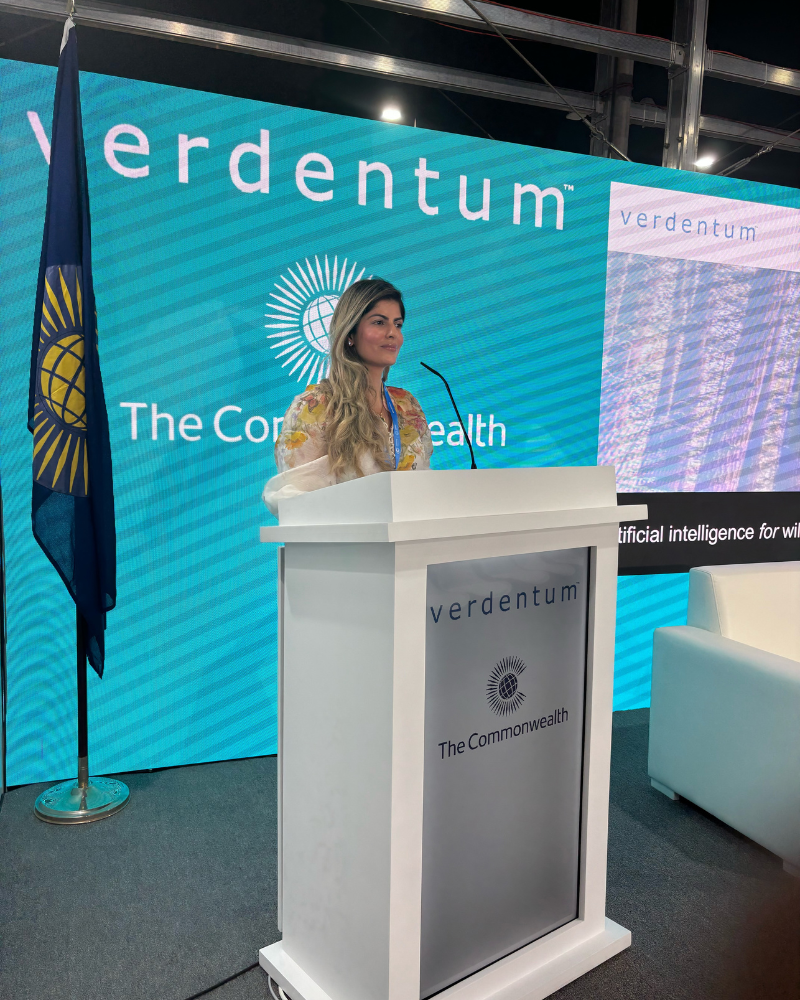
Ambika’s career has been rather unconventional. Before she had entered the world of deep-tech entrepreneurship, she built a reputation through her work in legal advocacy and regulatory policy, advising governments and mission-driven organisations while
championing causes ranging from animal rights to future food systems. She played a key role in campaigns against horse-drawn carriages in Mumbai and was instrumental in securing land for the Tata Small Animal Hospital. She has also advised the Government of Maharashtra, Tata Trusts, the Good Food Institute, and Azim Premji Philanthropic Initiatives on issues spanning sustainability, regulation, and social impact. Today, she brings that multidisciplinary approach to one of the defining challenges of our time: building businesses capable of transitioning the global climate towards a lower carbon footprint.
“I have been in rooms where I was the only woman present. The climate and deep-tech sectors remain disproportionately male. Only 14 per cent of formal businesses in India are solely or jointly owned by women and only a tiny fraction of capital invested in female-founded companies. The gap is not about performance, it never was”
MOSAIC: Your career path has taken you from law and public policy to deep-tech climate entrepreneurship. How did your previous background help with the transition?
AMBIKA: Law and science are more alike than people imagine. Both disciplines are about building the strongest possible case from available evidence. As an environmental and animal rights lawyer, I spent years simplifying complex information clearly for courts and regulators. At GreenCat, I am not in the lab, but I understand the data, and I know how to communicate it to different audiences. Deep-tech ventures don’t succeed on scientific excellence alone. They require deep familiarity with intellectual property, collaboration agreements, and the ability to communicate value to investors and industry leaders. When we’re negotiating with a major corporate partner or navigating a grant compliance review, that muscle memory helps.
MOSAIC: Your role emphasizes optimising processes to lower carbon emissions in heavy industries, but these sectors are often perceived as resistant to change. How do you convince them to adopt new, sustainable technologies?
AMBIKA: True about the resistance. You surely cannot walk into a boardroom and lead with climate idealism. Major energy companies are large organisations that operate within complex infrastructure, have shareholders to answer to, and must manage risk carefully. So, we begin by listening and understanding their existing challenges. Whether it is energy costs, regulatory exposure, or operational inefficiencies, we show them how GreenCat can solve their problems. We are not asking industries to rebuild their processes from scratch; we are helping them work more efficiently and with a lower emissions footprint.
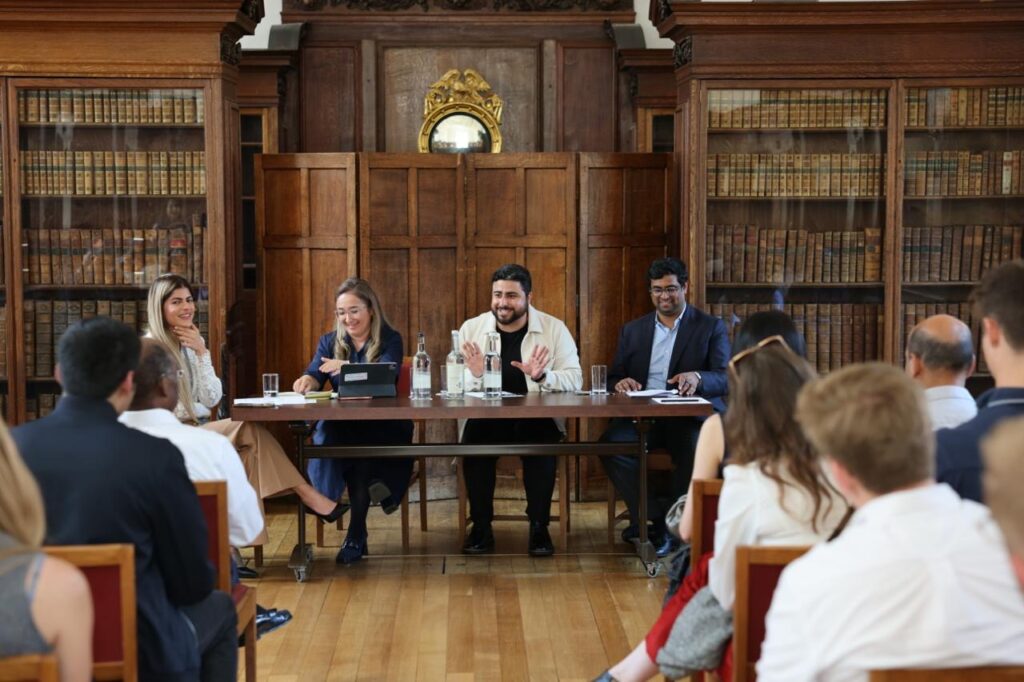
MOSAIC: What would you advise climate-tech founders currently working with technology that moves faster than government policies?
AMBIKA: Working in industries where regulation is still evolving teaches you that founders cannot afford to be passive observers, hoping for the governments to catch up. When technologies move faster than policy, companies need to engage proactively with regulators and policymakers. Waiting for someone else to create the framework often means losing valuable time and opportunities. My experience taught me that founders must become educators as well as entrepreneurs. Explain the technology, demonstrate its safety, and help shape the ecosystem that will eventually support its growth.
“My advice would be not wait for the rulebook to be written; go help write it. And then, build your commercial case so robustly that early adopters are willing to move with you”
MOSAIC: Through your fellowship at Cambridge, you worked with cutting-edge research. Why do you think many promising scientific ideas fail to reach the market?
AMBIKA: Honestly, scientific discovery and commercialisation require very different skill sets. Researchers are trained to answer scientific questions. Building a company requires understanding customers, procurement styles, fundraising, and partnerships. Many brilliant innovations fail not because the science is weak, but because there is a structural gap between the laboratory and the market. Universities are beginning to address this; Cambridge’s commercialisation ecosystem is genuinely world-class, but there is still a missing bridge between proof-of-concept and investable product. I see my role at GreenCat as being this bridge. Translating technical excellence into real-world impact is where meaningful innovation happens.
MOSAIC: What are the biggest challenges when trying to integrate climate innovations into long-standing industrial operations?
AMBIKA: Organisational inertia and long decision-making cycles, definitely. You can have a promising meeting with a senior executive, only to watch the proposal disappear into an internal approval process that takes months or even years to process. Large organisations are not designed to move at startup speed, and climate urgency does little to accelerate their R&D process. Another hurdle is that innovation teams and operational teams often work with different priorities and budgets. Even if one group is enthusiastic about a technology, scaling it requires buy-in across the organisation. What I’ve learned is that relationship breadth matters as much as relationship depth; you need champions at multiple levels
simultaneously. Building trust, maintaining momentum, and staying engaged over the long term are just as important as the technology itself. The partnership pipeline is a long game.

MOSAIC: You have represented climate innovation at major global platforms like COP28 and COP29. What is the biggest gap between the climate commitments and everyday reality?
AMBIKA: The gap is capital, and it’s enormous. At COP, you hear commitments measured in the trillions, transition finance, green hydrogen funds, and net-zero industrial pathways. Then you come back to your desk, and you’re back to struggling with funding, pilots, and commercial partnerships. There’s also a gap in what I’d call honest accountability. There is a disconnect between the urgency expressed in global conversations and the pace at which resources reach innovators on the ground. For a founder, that creates a landscape where you’re solving an urgent problem, but the market signals and funding flows don’t match that urgency. What keeps me going is that this is changing slowly. The startups that survive this transition period will be extraordinarily well-positioned.
MOSAIC: What role do you think universities should play in shaping future climate leaders?
AMBIKA: Universities need to stop treating entrepreneurship and sustainability as electives and start treating them as core infrastructure. Not every student will become a founder, but every scientist, engineer, and policy graduate entering the workforce needs to understand how innovation moves from idea to implementation. Institutions should create stronger pathways between research, industry, investors, and policy makers.
Cambridge is doing a good job in this regard. Programmes like those at Cambridge Judge Business School — including the Entrepreneurship Centre and the Cambridge Centre for Climate Repair — are designed precisely to successfully combine academic rigour and real-world application. The GreenCat story is partly a product of that ecosystem. But it isn’t universally replicated, and it needs to be. The institutions that treat deep-tech climate entrepreneurship as a first-class discipline will be the ones that produce the next generation of solutions we actually need.