


History of Footwear in India
Historically, footwear in India was primarily functional. Households owned a few pairs that lasted for years, and local, artisanal production dominated the market. Iconic brands such as Bata, which established its Batanagar factory in the early 1930s, marked the beginning of organized manufacturing in India, introducing durability and standardization. By the 1980s and 1990s, liberalization and rising incomes allowed urban consumers access to branded footwear, sports shoes, and casual options, slowly shifting the market from mere necessity to aspirational buying.
The last two decades have seen exponential change. Today, India is one of the world’s largest footwear producers, fuelled by both organized factories and unorganized clusters spread across states such as Tamil Nadu, Uttar Pradesh, and West Bengal. Government policies promoting manufacturing clusters, e-commerce, and foreign investment have accelerated the market’s growth. Organized brands now compete with thousands of small and micro-enterprises, producing both functional and trend-driven shoes at high volumes.

Consumer mindset
50 years ago a family might own one or two functional pairs, today, aspirational consumption and fashion trends drive individuals to own multiple shoes. E-commerce, influencer culture, and the rise of sneakerhead subcultures have normalized collecting hundreds of pairs, whether luxury or mass-market. Young men and women, especially, are participating in fast-fashion cycles, buying cheap alternatives from unorganized vendors and hoarding shoes for style, occasion, or social signaling. Reports highlight collectors owning 500–800 pairs, a cultural shift from mere functionality to luxury and identity-driven consumption.
India’s footwear industry reflects a microcosm of its economic and cultural evolution rising incomes, changing lifestyles, and globalization have propelled consumption, production, and fashion consciousness.
AGRA: Footwear Capital of India ?
How many shoes are too many shoes? A question for shopaholics: to indulge less and invest better. If sustainability has not yet hit your conscience and your shoe closets, then consider this, tomorrow we will have less trees and parks, and more waste grounds that we have ourselves created. Waste is a problem as of now, only the municipal corporations, waste authorities and waste pickers are dealing with – look at the brash of society that is mindlessly consuming, and selfishly producing, leading to wastes of all sorts, that is difficult to segregate, manage and lead to toxicity in soil, water and air.
Speaking of waste, shoes contribute alarmingly to landfills and to environmental pollution. Agra renowned for the majestic Taj is writing a poor environmental history. Agra is India’s footwear capital and produces nearly 1 million shoes every day, meeting 65% of India’s domestic demand. But with this scale comes a hidden cost: 45 tonnes of footwear waste daily, much of it dumped or burned—polluting drains, neighbourhoods, and even the Yamuna.
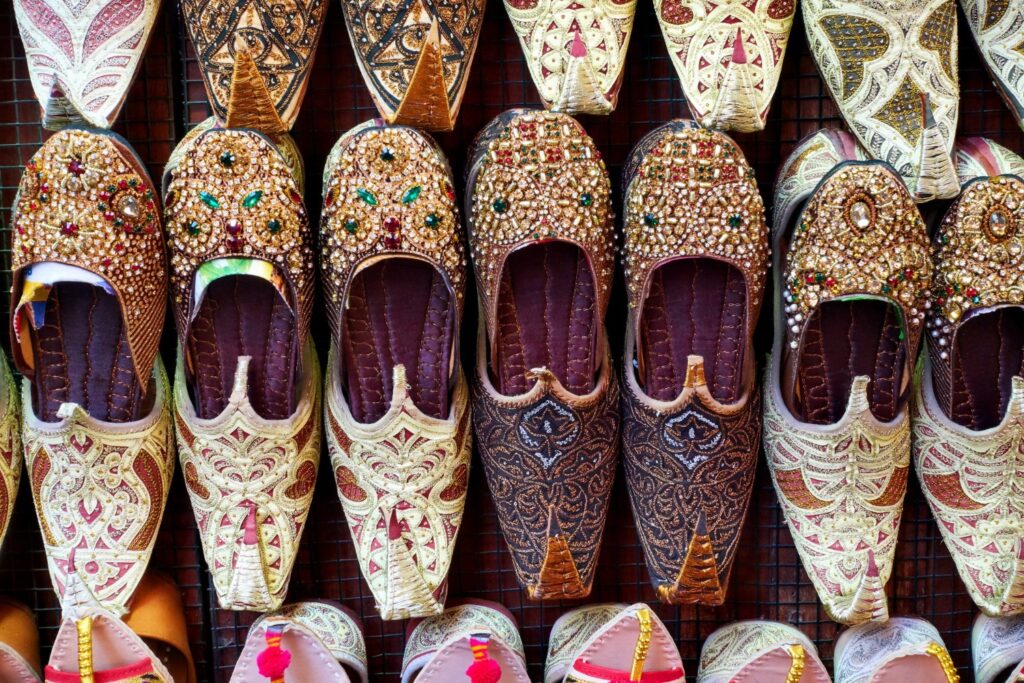
Do you know? Nearly 40% of this waste is leather and 36% synthetic polymers, many toxic and carcinogenic. With no formal recycling system, Agra’s big booming shoe industry is also a major environmental challenge and authorities are finding solutions working with Centre for Science and Environment (CSE) and climate start-ups to ensure a roadmap to making it more sustainable and mitigate waste challenges.
Customer’s role is important. The shift is much needed for sustainable and eco-friendly lifestyle choices, one must understand the ways in which we contribute to the planet and people. The demand – supply relationship drives markets, and if we invest in long-lasting comfortable shoes, we may not need to over buy – or simply follow trends and spend our money on new season collections each year. In addition shoppers, your buying behaviour is setting the working conditions and exploitations of labour in the unorganised sector largely – where with poor or no regulatory, producers want to meet the booming demand and pay less to workers and offer no support and even worse working environment.
Resources
CFLA / Industry Insight: India per-capita footwear consumption (~1.7 pairs), comparison with developed markets (~6–7 pairs).
IMARC / Grand View Research: Indian footwear market size, segmentation, and 2030 projections.
DCMSME White Paper on Footwear Sector (India): History, cluster-based production, and policy measures.
World Footwear Yearbook & “Footwear Consumer 2030”: Global production/consumption context and Indian projections.
RunRepeat shoe statistics: Global pairs sold annually, per-capita consumption benchmarks.
Academic LCA studies (MDPI 2024): Environmental footprint of footwear (CO₂e, materials, end-of-life challenges).
News coverage: Reuters, Apparel Resources, industry reports on manufacturing growth, state policies, and cluster developments.