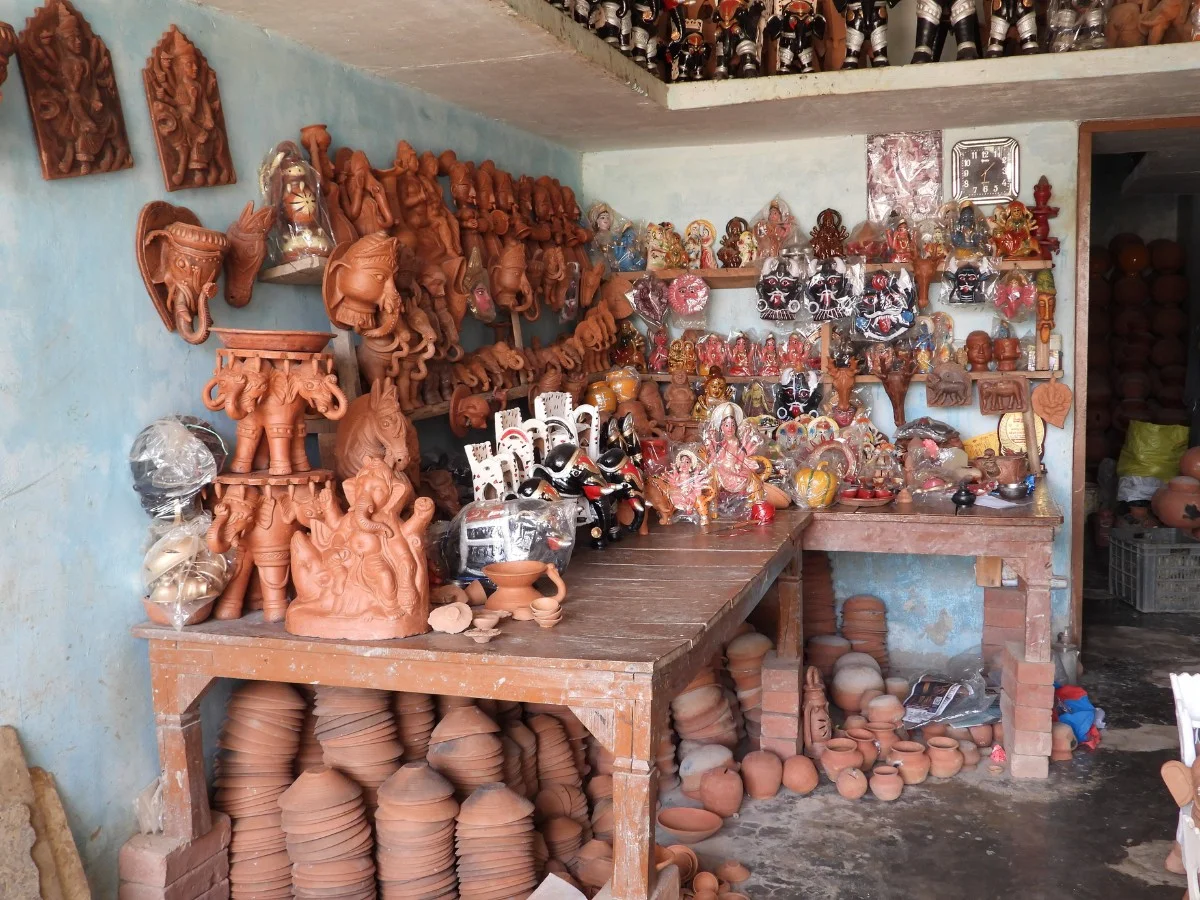
Molding Clay, Preserving Heritage: The Terracotta Journey of Gorakhpur’s Artisans

Gorakhpur’s terracotta heritage stands as a symbol of India’s age-old craftsmanship and cultural identity. Artisans like Munshi have dedicated generations to shaping clay into diyas, pots, and figurines, yet their livelihood faces a serious threat from plastic products and commercialization. Despite earning recognition with a GI Tag in 2020 and growing global demand for sustainable, handmade goods, artisans still struggle for access to quality clay, better workspaces, and fair markets. With only a few craftsmen remaining in many villages, this eco-friendly art is at risk of fading. Government support, increased fairs, and digital marketplaces are essential to preserve this clay tradition for future generations.

A Legacy in Clay

In the bustling city of Gorakhpur, Uttar Pradesh, where tradition and modernity meet, terracotta has long held a place of honor. For generations, families have molded clay into diyas, pots, figurines, and decorative pieces that brighten homes and rituals across India. Among them is Munshi, a veteran artisan and member of the Gorakhpur Terracotta Association, whose story reflects both the beauty and the struggles of this timeless craft.

Munshi journey began in 1982 in Aurangabad, Uttar Pradesh. Alongside five friends, he rented a small roadside shop and took his first steps into terracotta work. What started as a humble effort soon grew into a family enterprise. Today, his daughters, sons, and even the women of his household are part of the trade, shaping four to five cartloads of clay each year into items that sustain their livelihood. “This is the only work we know,” he says with quiet pride.

The Threat of Plastic and Commercialization

Yet the world around terracotta has changed. “Earlier, people used terracotta,” Munshi explains, “but now everything is being replaced with plastic. The value of this work is slowly disappearing.” With the rise of plastic goods, mass-produced home décor, and fancy commercial alternatives, demand for terracotta has declined sharply. What was once essential in every household – clay pots for storage, diyas for festivals, kulhads for tea, has now been replaced with synthetic and disposable options.This shift threatens more than livelihoods. It endangers an entire cultural heritage, one that embodies sustainability, artistry, and a deep connection to the soil.

Digitalization and New Pathways

Like many traditional crafts, terracotta faces a crossroads. On one hand, physical sales at local markets and fairs have dwindled. On the other hand, digitalization has opened new possibilities. E-commerce platforms, social media, and digital storytelling now give artisans the ability to reach buyers far beyond Gorakhpur. While not all artisans have access to or knowledge of these tools, there is hope that digital marketplaces can provide a bridge between age-old skills and modern consumer demand.

“The exhibitions and fairs are very important,” Munshi insists. “Whatever we made, it would sell there. Especially during Diwali, diyas and other items had good demand. But now fairs have reduced. If fairs increase, artisans will have a place to show their work, and our art will survive.” Digital markets may complement fairs, but artisans still need direct opportunities to connect with their communities.

The Call for Government Support

Support from the government, Munshi emphasizes, is essential. Access to quality clay from lakes and ponds is becoming increasingly difficult. Workspaces and storage facilities for clay are lacking. High electricity bills further burden artisans who already operate on thin margins.

“If the government can help with clay/mud, with proper space, and with some relief in electricity bills, it will support artisans like us,” he says. He also advocates for the creation of common centers in villages where groups of artisans can store clay, produce together, and sustain their work without interruption.

There has been progress. The Chief Minister of Uttar Pradesh has recognized the terracotta sector as part of the state’s handicraft pride, and some members of the Gorakhpur terracotta community have even been honored by the President of India. “This kind of respect gives us courage,” Munshi says, his voice lifting with hope. Recognition, however, must be paired with practical, ongoing support to truly revive the craft.

Threat of Community Dying

From dozens of artisans in each village, today only one or two often remain. Many families have abandoned terracotta because of low and irregular incomes. For those who continue, like Munshi, the work is more than just a profession, it is an identity rooted in soil and tradition.

“We don’t know any other work. This is our life,” he says firmly. His words echo the collective sentiment of a community that has given generations to shaping clay yet now finds itself at risk of being shaped out of existence by modern materials and market trends.

Preserving the Craft for Tomorrow

The story of Gorakhpur’s terracotta artisans is not just about clay – it is about survival, heritage, and resilience. It is about ensuring that an eco-friendly, sustainable craft does not fade away in the shadow of plastic. With government support, digital empowerment, and consistent community fairs, the future of terracotta can still be molded into one of revival and pride.

For now, the lamps, pots, and figurines continue to shine in Munshi modest shop, a reminder of both the fragility and the timeless beauty of this art form. Their earthy glow carries a message: preserving terracotta is not just about saving a craft, but about honoring the soil that binds us all.

India’s handicraft sector employs over 7 million people and contributes significantly to the economy, with exports worth around ₹31,000 crore (US$ 3.8 billion) in FY 2023-24. The country has over 744 craft clusters and more than 35,000 distinct handicraft products, reflecting both cultural depth and economic potential. Pottery and terracotta, among the oldest crafts, hold a special place within this ecosystem.

Terracotta artisans are spread across states such as Uttar Pradesh, Bihar, Jharkhand, and Assam. For instance, around 1,500 artisans in Jharkhand and 200 families in Assam’s Asharikandi village rely on terracotta as their livelihood, while in Bihar districts like Madhubani, 300–500 artisans continue the tradition. Gorakhpur terracotta, recognized with a Geographical Indication (GI) tag in 2020, is especially renowned for its distinctive designs, giving the region’s artisans an important identity in India’s cultural map.

The market outlook shows promise, with the Indian handicrafts sector projected to grow from USD 44.8 billion in 2023 to USD 71.3 billion by 2030. Rising global interest in sustainable, eco-friendly, and handmade products positions terracotta strongly, yet artisans still struggle with access to raw materials, fair wages, and modern markets. Recognition through GI tagging and government honors is a step forward, but sustained support, digital empowerment, and stronger market linkages are essential for terracotta to thrive in the face of plastic and mass-produced substitutes. Source: UP Tourism, NABARD, Bihar Tourism, IP Press, India Brand Equity Foundation.

Leave a Reply

Your email address will not be published. Required fields are marked *