
Sustaining the Soul of Sarees
Dabbling in hand done traditions of heritage embroideries and crafts, couturier Charu Saigal makes the saree relevant again through old world grandeur and sophisticated charm.
WORDS by SHARMI ADHIKARY

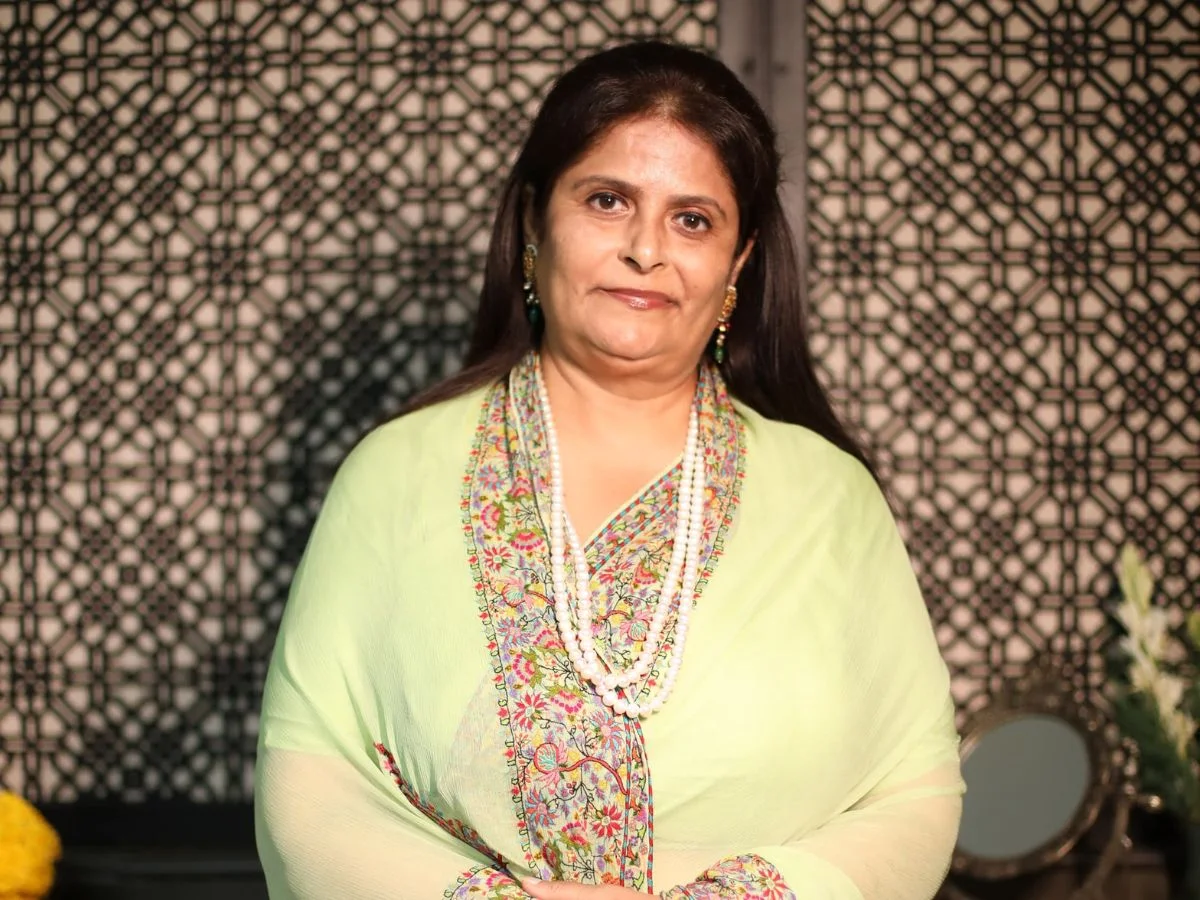
Image Credit: Charu Saigal
In the creative spectrum of craft, couture and collective responsibility towards their perpetuity, there is something we don’t often ask. Is it enough to just revive and save weaves, embroideries and other art that India earlier was celebrated for? Will that ensure longevity of these heritage collectibles? Yes, the people who continue creating them will be employed with work since the spur in demand shifts focus on them once more. But what happens after that when connoisseurs have had enough of the said art and their preference gears towards what is topical as per current trends? Is the interest adequate enough to entice the next generation of karigars to continue the trade?
When popularity is most often channelled by social media, and fashion choices alter with alarming alacrity, what is it that will sustain not just the demand but also the eco-system where heirloom quality artisanship thrives!
This thought was one of the decisive factors that made Charu Saigal set up her atelier. Crafting one-off silk chiffon sarees embellished with hand-embroidered artwork reminiscent of old world intricacy and precision that Indian karigari was applauded for all over the world, Charu almost gave a shot in the arm to embroiderers who had stopped investing their time, energy and patience into such fine work. But if you carefully study the Bhanu Athaiya-esque approach in her sartorial vocabulary, you will recognise the aura she has been trying to bring back. Graceful women languidly wafting by in their embellished sarees that needn’t over power the intrinsic charm of the wearer. Rather the work or the colour of the creation complements the person draping it.

“Sustainability doesn’t make sense unless you approach it multi-dimensionally. The saree is emblematic of India but over a period of time the demand for it went through a lull. They needed a makeover that connoisseurs would not be able to resist.”
“Sustainability as a concept doesn’t make sense unless you approach it multi-dimensionally. The craft can’t be considered in isolation. The saree is emblematic of India but over a period of time the demand for it went through a lull. So, the first step was to give them a fall and adornment that connoisseurs would not be able to resist,” says the designer, adding, “My design ideologue has never been tilted towards excessive visibility or pandering to social media noise. The idea is to do work that is coveted by people who value intricacy, patience and that meditative nature of the craft. They don’t seek validation of brand tags. They feel proud wearing something prestigious and authentic. In a way, they breathe life into the ensemble.”
The second step was travelling to embroidery clusters in Kashmir and Awadh regions to finalise karigars who have the skill to embroider with excruciating finesse. “It would be easy to sell mota dana kaam that is flooding commercial chowks these days. But that wouldn’t serve the purpose of igniting the interest for baarik kaam that our country has always been celebrated for, right? Several pieces are made during trials. Some even get rejected and yet the difficulties cannot deter us from sustaining top quality work because the whole idea is to craft ethereal pieces for the niche audience who will be inspired to own heirloom pieces,” she explains further.


The third rung of her functioning sounds the most convincing leg of promoting timelessness that essentially should be the very core of sustainable fashion. “The real challenge lay in the Kashmiri craft clusters,” she recalls, adding, “In a country like India where winters are short lived, how do you stretch the lifeline of embroideries like Sozndozi, Papier Mache, Tilladozi and Kalamkari (with threadwork) usually done on shawls. The kashidakars were unable to first embroider on silk chiffons. While the master artisan were accustomed with embroidering with the highest level of finesse on Pashmina shawls, I wanted them to translate their beautiful craft on pure silk chiffons. We wasted many pieces during trials but the perseverance paid off. Today, some of our best sellers are the silk chiffons with Kashmiri heritage embroideries. True heirlooms.”
With the work stabilised in Kashmir, when Charu delved into Awadhi crafts, she found Chikankari, Zardozi, Mukaish, Kaamdani, Marori and Dabka primarily done on cotton and silk georgettes. “Getting the karigars to transport the techniques on pure silk chiffon wasn’t too tough though they did require a bit of convincing,” the aesthete says.
While this largely explains the deep diving the doyen does into the essence of the craft that Charu’s atelier exemplifies, she is a stickler for the saree because of her love for the garment.
“Not just admiration. We cannot forget that it is an Indian symbol of grace and grandeur. We need to resuscitate adoration for it! Young women should actually be shown how fascinating the saree is, too. But, the approach needs to be clever.”
Through a narrative on mainstream media that exemplifies the romance in a saree, young women can be initiated to take to the garment where she feels like a princess wearing them without any inhibition, Charu believes. “In a way, film celebrities also play a role here. By wearing craft laden six yards during important ceremonies and on red carpets they can influence their followers,” she says.
Indian designers also need to maximise on the glorious moment India is having on the global fashion radar. And hence, this is the best time to gradually initiate young Indian women to the wondrous world of sarees by stoking nostalgia even as the beauty of them eggs the girls to style the drapes with interesting blouses and accessories.
“This increases the scope of the saree amidst an impressionable generation, who have a mind of their own. One has to understand the romance and beauty associated with the garment in order to sustain its existence in the fashion space. That is why I feel a sense of accomplishment when I see young brides adhering to our cultural crafts and embroideries for their wedding outfits and trousseau. They glow in these heirloom creations even more because they have made a conscious choice that is a class apart from the usual commercial apparels available. It signifies changes for the good in their sartorial journey,” beams Charu.
Initiated into the world of handcrafted couture more than a decade ago, Charu egged her artisans on to adapt to her unique mood boards while remaining faithful to their
traditional karigari. Having travelled extensively in India and abroad, she imbibed the local culture and invested attention to understand the unique handicrafts of each region. If you take a good look at hand embroidered sarees and separates crafted in each region you will understand the eye for details as well as the knack to play with design narratives, she asserts.
“The very premise of my getting into embroidered artwork came from my passion as an artist. I have had exhibitions of my painted floras and sceneries. People appreciated them
immensely. For the art to evolve, it needed to be translated to a fresh medium. My brushstrokes transcended to embroidered finesse on fabric. If you look at my threadwork sarees, you will notice the shading done with colours in the leaves and petals. That is the detailing we get into! An artist’s expression got a fresh lease of life in the atelier.”
But why this favouritism with silk chiffon, we ask? “Why not?” Charu remarks. Growing up with a mother who wore the most ethereal silk chiffons to family gatherings and parties, Charu realised that it is that aesthetic she inherently imbibed. “Have you seen the screen goddesses in 60s Hindi films? They all looked dreamy in silk chiffons but each one had a distinctive style of their own. Hence, we still are fascinated by them. Isn’t that proof enough that no matter what, that is the aura that will never go out of fashion discourse? This timelessness is what I want connoisseurs from all parts of the country to understand and identify with. It clearly is automatically sustainable in a milieu peppered with fleeting trends?!” Charu sounds reassured.

Image Credit: Charu Saigal