sdgmosaic@gmail.com

sdgmosaic@gmail.com

Preserving Architectural Legacies: An Exclusive Conversation with Dr. Benny Kuriakose on Architecture, Conservation, and Sustainability

Preserving Architectural Legacies: An Exclusive Conversation with Dr. Benny Kuriakose

Dr. Benny Kuriakose, one of India’s foremost architects and conservationists, began his career in 1984 under the tutelage of the legendary Laurie Baker, who instilled in him a philosophy of simplicity, cost-effectiveness, and sensitivity to context. He later pursued an MA in Conservation Studies at the University of York, UK, on the prestigious Charles Wallace India Trust Award. On his return, he pioneered cost-effective projects in Kerala and soon after the 1994 Latur earthquake, was commissioned by Malayala Manorama to design the rebuilding of Banegaon village, a landmark in community-driven rehabilitation.
Benny is renowned for his public building projects and the transplantation of traditional structures at the Kerala Section of Dakshinachitra Craft Village, Chennai. His recent architectural works include the Ananthya Resort, the tsunami-affected villages of Chinnangudi and Tarangambadi, and the Harishree Vidyalaya School. His conservation projects include the development plans for Muziris and Thalassery Heritage Sites, and the restoration of heritage landmarks such as Paravur Synagogue, Paliam Dutch Palace, Cheraman Masjid, and Gable Bungalow. He has also executed adaptive reuse projects like converting heritage structures into hospitality spaces at Springdale Heritage (Vandiperiyar) and Club Mahindra (Ooty).
Author of Conserving Timber Structures in India and co-editor of Guidelines for the Preparation of a Heritage Management Plan, Dr. Kuriakose has worked as a consultant with UNDP, various State Governments, and international organizations. He has also taught as visiting faculty at IITs, IIMs, the School of Planning and Architecture (Delhi), and several other institutions—guiding the next generation of architects towards sustainable practice.

Between Boardrooms and the Jungle: Brajesh Singh on Finding Balance

Between Boardrooms and the Jungle Brajesh Singh on Finding Balance

When Brajesh Singh speaks, his words carry the authority of someone who has spent decades advising governments and public and private corporations of India in sectors as complex as energy, power, gas, water, digital infrastructure, and telecom. Yet, when he begins to describe his life in the Kanha Tiger Reserve of Madhya Pradesh, his voice shifts into something more reflective, more personal and more candid. Here, amid the sal forests and the quiet presence of tigers, Brajesh Singh is not an advisor or a professional, he is a photographer, a nature lover, and above all, a man who has found peace in the wilderness. Brajesh Singh was featured on The Voice of MOSAIC, where he shared his dual journey of corporate leadership and ecological passion. The conversation wove together his deep love for wildlife with his nuanced understanding of India’s development trajectory.

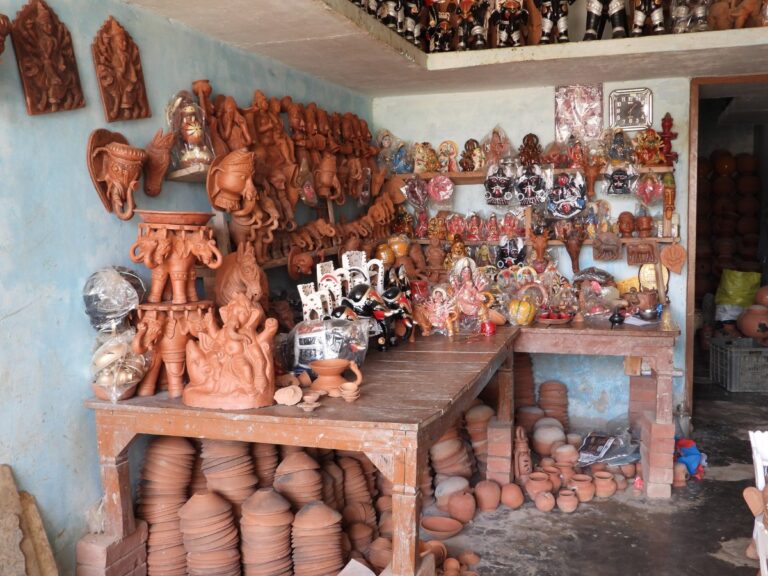
Molding Clay, Preserving Heritage: The Terracotta Journey of Gorakhpur’s Artisans

Gorakhpur’s terracotta heritage stands as a symbol of India’s age-old craftsmanship and cultural identity. Artisans like Munshi have dedicated generations to shaping clay into diyas, pots, and figurines, yet their livelihood faces a serious threat from plastic products and commercialization. Despite earning recognition with a GI Tag in 2020 and growing global demand for sustainable, handmade goods, artisans still struggle for access to quality clay, better workspaces, and fair markets. With only a few craftsmen remaining in many villages, this eco-friendly art is at risk of fading. Government support, increased fairs, and digital marketplaces are essential to preserve this clay tradition for future generations.

Rediscovering India through Stories: Conversation with Gaurav Bhan Bhatnagar – Founder of The Folk Tales

While searching for impactful stories we found Gaurav narrating tales of Delhi the way we never knew Delhi to be, instantly drawn to his storytelling and the nuances of history and old world charm that subtly but eloquently encapsulates city’s reflection to the modern tourist. India is often described as a land of stories, traditions, and diverse cultures, yet in the rush of modern life, many of these narratives are forgotten. Gaurav, is the founder of The Folk Tales, a custom tours company that won the Gold award for the ‘Best Cultural Immersion Operator’ category, by Indian Responsible Tourism Awards (IRTA) the regional wing of the World Responsible Tourism Awards (WRTA). Gaurav has spent more than a decade creating immersive travel experiences rooted in Indian heritage. His work blends storytelling with sustainable tourism, encouraging people to reconnect with their roots while exploring offbeat destinations.
In this conversation, he reflects on how The Folk Tales began, the challenges of working with both Indian and international tourists, and why cultural continuity matters in today’s rapidly changing world.

The Northeast Stories by Hoihnu Hauzel: A Medley of Culture, of Resilience and Strength

The Northeast Stories by Hoihnu Hauzel

Hoihnu Hauzel is a seasoned journalist and author with decades of experience in promoting the cultural and culinary heritage of Northeast India. She has had a career spanning top media like The Asian Age, Indian Express, and The Telegraph, she has developed expertise in art, culture, travel, education, and human rights. Her book, "The Essential Northeast Cookbook," showcases the region's rich flavours and traditions, introducing Northeast cuisine to a global audience. Through her work, Hoihnu continues to shed light on the complexities and nuances of the Northeast, emphasizing the importance of oral traditions, storytelling, and cultural preservation. MOSAIC had the pleasure to interview Hoihnu and learn about her inspiring work in promoting Northeast culture, and the inside story that needs to be honoured more as an integral part of our heritage and our diverse identity.

Dr Surheeta Kareem: Self-Care Is Health First!

Dr Surheeta Kareem Self-Care Is Health First!

When Dr. Surheeta Kareem began her medical practice in Gorakhpur four decades ago, the city had little to offer in terms of modern healthcare. At that time, there were hardly two or three qualified doctors available, and women in particular had almost no access to specialized medical care. Yet, Dr. Kareem—today a senior gynaecologist, laparoscopic surgeon, and Director of Star Hospital, Gorakhpur—chose to establish herself in this city, determined to change the narrative of women’s health. The beginning was not easy. Setting up her practice at a time when clinics were scarce and infrastructure was minimal required perseverance. But what made Gorakhpur stand out, Dr. Kareem recalls, was its warmth and openness. The community welcomed her, extended trust, and supported her efforts. Over the years, she went on to establish the city’s first laparoscopic clinic, bringing advanced procedures to women in the region who had never before had access to such care. Her voice, featured on the Voice of Mosaic podcast, reminds us why women’s health cannot be treated as secondary or optional. Awareness, she insists, is the first step toward empowerment. And in the conversation, she unfolds a comprehensive journey of women’s health—starting with puberty and moving through parenthood, menopause, and beyond.

Srikalahasti, Andhra Pradesh, Known for its Timeless Art: Kalamkari

Whether one navigates the labyrinthine streets of India’s ancient villages and towns or acquaints themselves with the cultural depth through Indian literature, they are immersed in a kaleidoscope of colors, textures, patterns, and stories that weave together the rich tapestry of India’s textile heritage. Among the myriad of traditional crafts, Kalamkari stands tall as a testament to the country’s enduring artistic legacy. In this article, MOSAIC pays tribute to the world of Kalamkari, exploring its history, significance, challenges, and revival efforts that are bringing this exquisite art form back into the limelight. And to Srikalahasti, the town that tells this tale of resilience and glory.

Seed by Mosaic – Art of Doing Nothing. A Slow-leisure Himalayan Retreat by Juhi Singh.

Amid the rolling hills of Ranikhet, where pine forests whisper in the wind and the air carries the scent of wildflowers, a new kind of hospitality is taking root. Seed by Mosaic is not just another luxury retreat—it’s a reimagining of what luxury itself means. Founded by Juhi Singh, Seed is born from the belief that the greatest indulgence today is not excess but stillness. In an era where travel often feels like a checklist of experiences, Seed invites its guests to pause, breathe, and embrace “the art of doing nothing.” With minimalist architecture that blends seamlessly into its natural surroundings, rituals that celebrate unhurried living, and a deeply embedded sustainability ethos, Seed represents the growing movement of conscious, slow travel in India. At its core, it is a sanctuary for those who seek authenticity, connection with nature, and the rare luxury of time—time to simply be.

Planet Abled: Mainstreaming Inclusivity & Accessibility in Sustainable Tourism Interview with Neha

When we talk about sustainable tourism, the words most often heard are eco-friendly, green energy, cultural conservation and carbon-neutral travels. Yet one dimension of sustainability often slips through the cracks; inclusivity. For Neha Arora, Founder of Planet Abled, the conversation is incomplete unless accessibility is placed at the heart of it. Her work challenges an industry that has historically ignored travellers with disabilities, exposing both a moral and a business failure. This interview details into the impact of Planet Abled in not only bridging the gap for people with disability and travel industry, but also educates society on travel is for all, and people with disability need not be locked indoors, but they have the right and interest in exploring places too.

Aaranyam: Not a 115-year-old home stay, but an unmatched experience.

_Floreaves Curry Leaf Hair Mask

Tucked away in the serene hills of Ranikhet, Uttarakhand, Aaranyam is not just a homestay or a getaway, it is an experience, a philosophy, and a lesson in slow living. Built by Kumar Shivam, an artist, filmmaker, writer and heritage enthusiast, Aaranyam reflects a conscious choice to revive intangible heritage, restore cultural narratives, and craft an immersive journey that connects people to the roots of Kumaon and Garhwal in Uttarakhand.

“I didn’t make it a museum; I made it useful,” Shivam begins. “Even today, the water we provide comes from a big copper pot, just like people used to use a hundred years ago. Everything here is about bringing the past into the present.” MOSAIC explores what Kumar Shivam, Founder of Aaranyam means by living the simple-slow life, immersed in culture, stories, traditions, values and ancestral legacy.